





Table of Contents
Seed potatoes are specially grown potato tubers used for planting, rather than eating, and they are the starting point for growing your own crop at home.
Certified and carefully selected for health and vigour, seed potatoes give you the best chance of producing strong plants and a reliable harvest.
Potatoes are one of the most popular vegetables grown in the UK, and for good reason. Versatile, dependable, and deeply satisfying to grow, the humble potato earns its place in gardens and kitchens across the country. There is something uniquely rewarding about lifting your own crop from the soil, giving them a quick wash, and enjoying them fresh for supper the very same day.
If you are growing potatoes at home, one of the first decisions you will make is which type of seed potato to choose. From quick-cropping First Earlies to dependable Main Crop varieties for storage, each type has its own advantages depending on when and how you want to harvest.
In this guide, we explain the differences between seed potato types to help you choose the right option for your garden, along with recipe inspiration drawn from our Hillier restaurants.
If you are looking for practical growing advice, including planting times and aftercare, you can also read our guide on how to grow your own potatoes.
Seed Potato Crop Types: First Earlies, Second Earlies and Main Crop
Choosing the right type of seed potato is the first step in a successful harvest. Each crop type has its own unique characteristics, growing season, and culinary uses, so picking the right one can make all the difference between a feast and a flop. Here’s what you need to know:
First Earlies – Quick and Delicious
First Earlies are considered the sprinters of the potato world. Planted early in the season, they grow quickly and are ready to harvest in just 10 to 12 weeks! The tubers are usually small to medium-sized with a smooth skin and waxy texture, perfect for boiling or adding to fresh summer salads.
If you’re after the thrill of tasting your own home-grown potatoes while the season is still young, First Earlies are your go-to. They’re ideal for containers, grow bags, or smaller garden plots, making them perfect for urban gardeners or beginners keen to see results fast.
Second Earlies – Steady and Reliable
Second Earlies occupy the middle ground between speed and storage. They take a little longer to mature than First Earlies but still offer a relatively early harvest. These versatile potatoes tend to have slightly larger tubers and a firm, creamy texture, which makes them excellent for boiling, roasting, or mashing.
For gardeners who want more flexibility in planting and harvesting, Second Earlies are a dependable choice. They bridge the gap nicely if you want to enjoy fresh potatoes for longer into the season.
Main Crop – Robust and Long-Lasting
Main Crop varieties are the marathon runners of the potato family. They take the longest to grow, often 15 to 20 weeks, but reward patience with larger, hearty tubers that store well for months on end. Floury or slightly waxy, these potatoes are perfect for roasting, baking, and hearty winter dishes.
Main Crop seed potatoes are ideal for gardeners who like to plan ahead. Plant them in April or May, and you’ll have a generous harvest ready for autumn and winter. With proper storage, they can keep you supplied with delicious, home-grown potatoes long after the season ends.
More from our Garden and Home ideas:
- Ready to start? Here’s how to grow potatoes.
- Save space and discover how to grow potatoes in a bag.
- Discover our range of propagation equipment to get your growing season off to a great start.
Seed Potato Varieties and Their Uses
Before you dive into the individual potato varieties, we’ve compiled a quick snapshot of the main types you might choose for your garden. This table summarises planting and harvest times, texture, and best culinary uses, giving you a fast way to compare options. Scroll down for a closer look at each variety, including tips on growing, flavour notes, and recipe ideas to get the most from your harvest.
| Variety | Crop Type | Plant | Harvest | Texture / Best Uses |
| Swift | First Early | Feb – Apr | May – Jun | Waxy, small tubers – best boiled or as new potatoes |
| Pentland Javelin | First Early | Feb – Apr | May – Jun | Waxy, cream flesh – salads, boiling |
| Rocket | First Early | Feb – Apr | May – Jun | Waxy – ideal for salad potatoes |
| Casablanca | First Early | Feb – Apr | May – Jun | Waxy, delicate flavour – boiled |
| Maris Peer | Second Early | Mar – May | Jul – Aug | Firm, creamy – great for salads or boiling |
| Desiree | Main Crop | Mar – Apr | Jul – Oct | Floury/creamy – versatile for mash, roast, bake |
| King Edward | Main Crop | Mar – Apr | Jul – Oct | Floury – classic roasting and baking choice |
| Maris Piper | Main Crop | Mar – Apr | Jul – Oct | Floury – excellent all‑rounder |
| Picasso | Main Crop | Mar – Apr | Jul – Oct | Good flavour – roasted, mashed, boiled |
| Charlotte | Salad (Second Early) | Mar – May | Jul – Sep | Waxy – holds shape, perfect for salads |
First Earlies
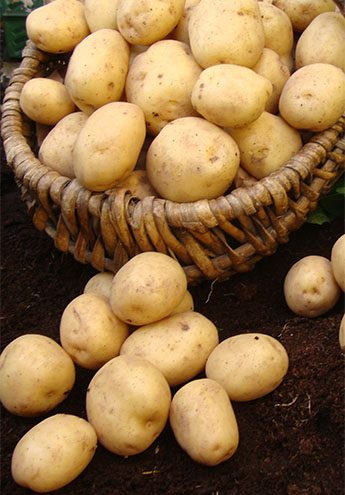
Swift – First Early
- Plant: Feb – Apr | Harvest: May – Jun
- Texture: Waxy, small tubers.
- Uses: Ideal boiled or in summer salads.
- Growing tips: Perfect for containers or small plots; full sun; quick cropping.
- Why choose: One of the fastest varieties, enjoy new potatoes early in the season.
Pentland Javelin – First Early
- Plant: Feb – Apr | Harvest: May – Jun
- Texture: Waxy, cream flesh.
- Uses: Boiling, salads.
- Growing tips: Compact plants, suited to smaller gardens; keep soil moist for best yields.
- Why choose: Reliable early cropping with good flavour and known widely as the classic “new potato” taste.
Rocket – First Early
- Plant: Feb – Apr | Harvest: May – Jun
- Texture: Waxy.
- Uses: Salads, boiling.
- Growing tips: Early variety for containers or borders; responds well to feeding.
- Why choose: Quick growing with consistent results and is known more so for its incredible growing speed and clean look over its taste.
Casablanca – First Early
- Plant: Feb – Apr | Harvest: May – Jun
- Texture: Waxy, delicate flavour.
- Uses: Boiled, chips, summer salads.
- Growing tips: Compact plants, good for smaller plots or containers.
- Why choose: Early and tasty, perfect for first potatoes of the season. This is a multi-purpose variety and is one of the few First Earlies which make excellent chips.
Second Earlies / Salad Varieties
Maris Peer – Second Early
- Plant: Mar – May | Harvest: Jul – Aug
- Texture: Firm, creamy.
- Uses: Salads, boiling.
- Growing tips: Performs well in beds or containers; maintain consistent watering.
- Why choose: Reliable mid-season potato, versatile and easy to grow. This is the supermarket potato; it’s well known for not breaking when boiled.
Charlotte – Salad / Second Early
- Plant: Mar – May | Harvest: Jul – Sep
- Texture: Waxy.
- Uses: Salads, holds shape when cooked.
- Growing tips: Perfect for light soils and containers; likes full sun. This is widely considered the gold standard for potatoes.
- Why choose: Favourite salad variety, excellent flavour and presentation.
Main Crops
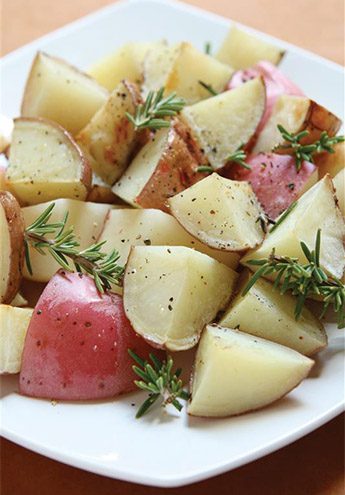
Desiree – Early Main Crop
- Plant: Mar – Apr | Harvest: Jul – Oct
- Texture: Floury / creamy.
- Uses: Mash, roast, bake.
- Growing tips: Prefers fertile, well-drained soil; suitable for larger beds.
- Why choose: Classic all-rounder, reliable for autumn and winter meals.
King Edward – Main Crop
- Plant: Mar – Apr | Harvest: Jul – Oct
- Texture: Floury.
- Uses: Roasting, baking.
- Growing tips: Needs space to develop large tubers; feeds well for bigger yields.
- Why choose: Traditional favourite for flavourful roasts.
Maris Piper – Main Crop
- Plant: Mar – Apr | Harvest: Jul – Oct
- Texture: Floury.
- Uses: Roast, mash, chips.
- Growing tips: Performs in most soils; keep well-watered for best tuber development.
- Why choose: Reliable, high-yielding, versatile for many dishes and arguably the most popular potato in the UK. This potato is excellent for chips due to their high dry matter.
Picasso – Main Crop
- Plant: Mar – Apr | Harvest: Jul – Oct
- Texture: Waxy but Floury.
- Uses: Roast, mash, boil.
- Growing tips: Best in fertile, well-drained soil; regular watering improves flavour.
- Why choose: Unique flavour and colour, ideal for adventurous cooks. This potato is often regarded as being better for boiling and mashing than roasting.
Why stop at potatoes? Grow the whole salad at home with our helpful guides full of tips and tricks we’ve learned from years of experience!
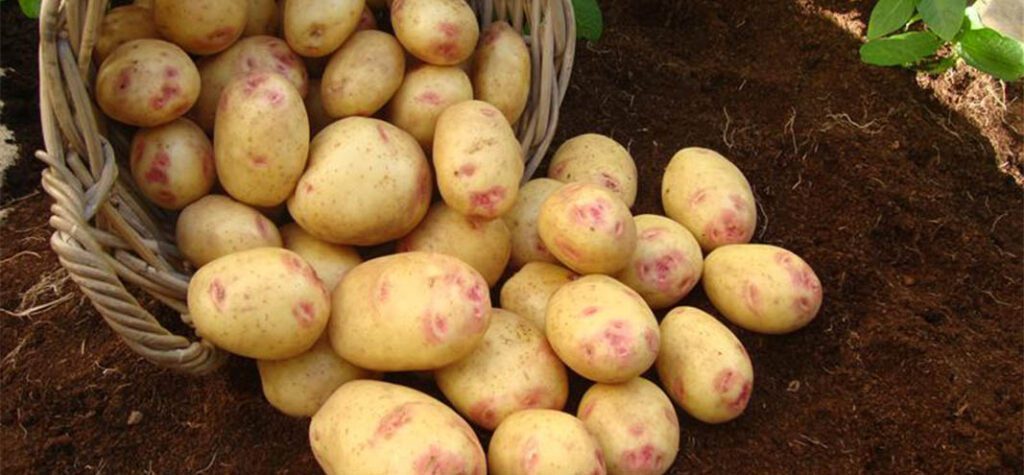
Good Potato Varieties for Beginners
If you’re new to growing potatoes, it helps to start with varieties that are reliable, forgiving, and quick to crop. These options are easy to grow in most UK gardens, provide consistent yields, and are perfect for first-time growers.
Beginner-friendly varieties:
- Swift – First Early: Quick to harvest, small waxy tubers ideal for salads
- Rocket – First Early: Easy, fast-growing and consistent results
- Maris Peer – Second Early: Mid-season cropping, versatile for salads or boiling
- Desiree – Main Crop: Classic all-rounder, tolerant and dependable
- Charlotte – Salad / Second Early: Waxy, holds shape well, perfect for beginners
These varieties offer a great combination of speed, flavour, and ease of care, making your first potato harvest both rewarding and delicious.
Growing Tips for Seed Potatoes
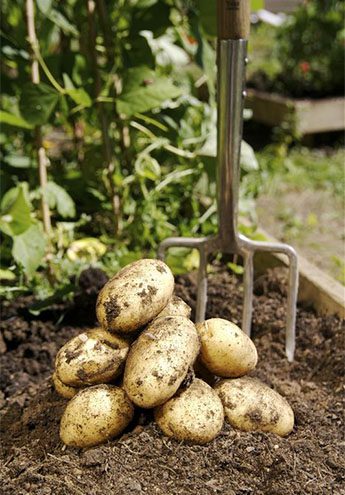
Growing your own potatoes doesn’t have to be complicated. A few simple steps will help ensure a healthy crop and tasty tubers:
- Chit your potatoes: Place your seed potatoes in a light, cool spot for a few weeks before planting so the sprouts start to grow. This gives them a head start and can speed up your harvest.
- Plant in fertile, well-drained soil: Choose a sunny spot and dig trenches or plant in containers or grow bags if space is limited.
- Water regularly: Keep soil consistently moist, especially during flowering and tuber development, but avoid waterlogging.
- Feed lightly: A balanced fertiliser or compost can help boost yields, particularly for Main Crop varieties.
- Harvest carefully: Earlies can be lifted as soon as the tubers are big enough to eat; Main Crops should be left until the foliage dies back.
These tips are easy to follow, even for first-time growers, and will give you the best chance of a satisfying harvest. Remember, for a full guide have a read of our how to grow potatoes article!
Potato Recipe Inspiration
If you are still struggling to make a choice, browse through our potato recipe selection. Inspired by the development team at our Hillier restaurants, we’ve picked some of the perfect ways to use some of our seed potato varieties
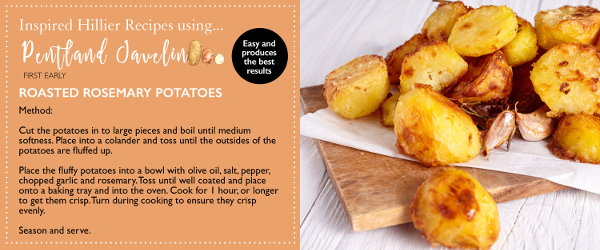
Pentland Javelin Potato Recipe Idea
A high-yielding variety. A good potato for a variety of uses, including roasting, as chips and as a jacket potato.
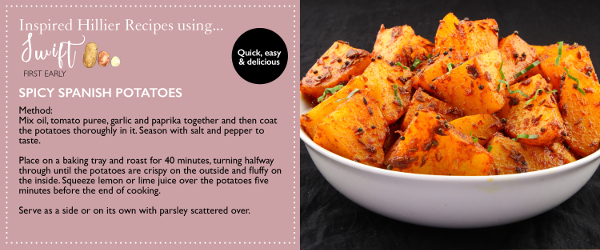
Swift Potato Recipe Idea
Swift by name and swift by harvest; this is the earliest harvesting variety of all. A versatile variety for boiling, as a salad potato, for roasting and more.
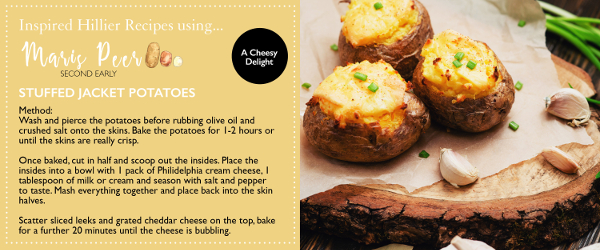
Maris Peer Potato Recipe Idea
A popular, high-yielding, good all-rounder potato variety. Use as a jacket potato, for mash, boiled, steamed, in salads and more.
Desiree Potato Recipe Idea
Instantly recognisable with their red skin and yellow flesh, Desiree are extremely popular potatoes. They have a firm, creamy flesh and are extremely versatile, although not good as a salad potato. They can be grown as a normal Main Crop variety, or, you can choose to keep them in the ground longer and get larger potatoes as a result. Good to mash, chip, roast or bake 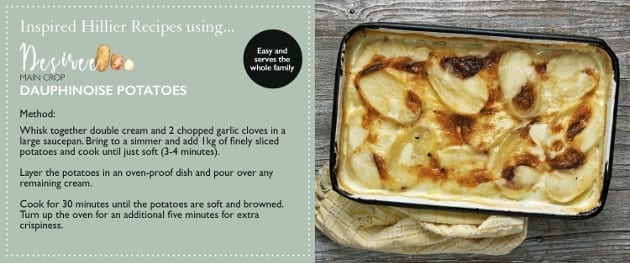
Maris Piper Potato Recipe Idea
Perhaps the most famous variety of all, you can find Maris Piper in any supermarket with its floury texture and creamy-white flesh. This arguably makes it less attractive to grow yourself, but it is a fantastic all-rounder for recipes and stores well. Good to boil, chip, roast or bake

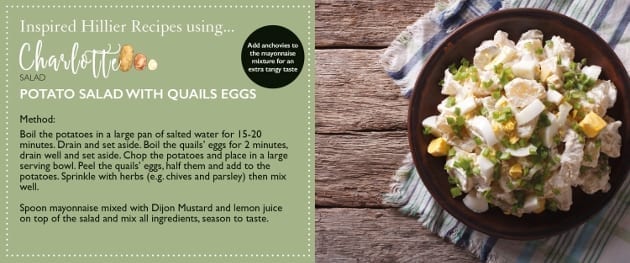
Charlotte Potato Recipe Idea
The best known of all the salad potatoes is Charlotte – so much so, that many recipes specifically suggest using them. They are slightly waxy with yellow flesh and hold their shape fantastically when boiled. They taste wonderful eaten both hot and cold. In terms of planting time, it fits with the ‘second earlies’. Good to boil, roast or use in salads
Get Set, Grow! Grab Your Potato Growing Supplies Today

Add To Wishlist
To save products, log in to your Gardening Club account or create a free account.
Login To Your Account
Gardening Club offer
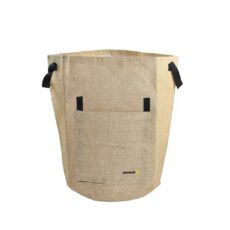
Grow It Jute Potato Planter Bag
£14.99
£9.99Gardening Club price
 Add To Basket
View Product
Add To Basket
View Product
Growing your own potatoes is rewarding, simple, and a great way to enjoy fresh, home-grown produce straight from the garden. Whether you’re a complete beginner or an experienced gardener, choosing the right variety, giving them a head start through chitting, and following a few basic care tips will help you harvest delicious tubers throughout the season.
Explore the varieties above, decide which suit your garden and taste, and get digging! With a little attention and a lot of enjoyment, your seed potatoes will soon be ready for the table.
Seed Potatoes FAQs
A tuber is the part of the potato plant that stores energy and nutrients, it’s what we harvest and eat. Seed potatoes are healthy tubers specifically grown for planting, not eating.
Chitting is the process of encouraging your seed potatoes to sprout before planting. Place them in a cool, light spot for a few weeks until shoots appear, this gives them a head start in the garden.
Plant seed potatoes around 10–15 cm (4–6 in) deep. Larger tubers can go slightly deeper. Cover with soil and leave the shoots pointing upwards.
Space seed potatoes about 30 cm (12 in) apart in rows 60 cm (24 in) apart. This gives the plants room to grow and produces larger tubers.
Use a large container or grow bag with good drainage. Add a few inches of compost or soil at the bottom, place the tuber with shoots pointing upwards, then cover lightly with soil. Add more soil as the plant grows.
Plant in February–April for First Earlies or March–April for Main Crops. Make sure the grow bag is in a sunny spot and water regularly.
It’s best not to! Supermarket potatoes are often treated to prevent sprouting and may carry disease. Use certified seed potatoes for healthy, reliable crops.
Keep soil consistently moist, especially during flowering and tuber development. Avoid overwatering or waterlogging, which can cause rot.
First Earlies are usually ready in 10–12 weeks, Second Earlies in around 14 weeks, and Main Crops in 15–20 weeks. Lift carefully to avoid damaging the tubers.
Store in a cool, dark, well-ventilated place. Do not wash before storage, brush off excess soil and leave skins intact to prevent rot.